


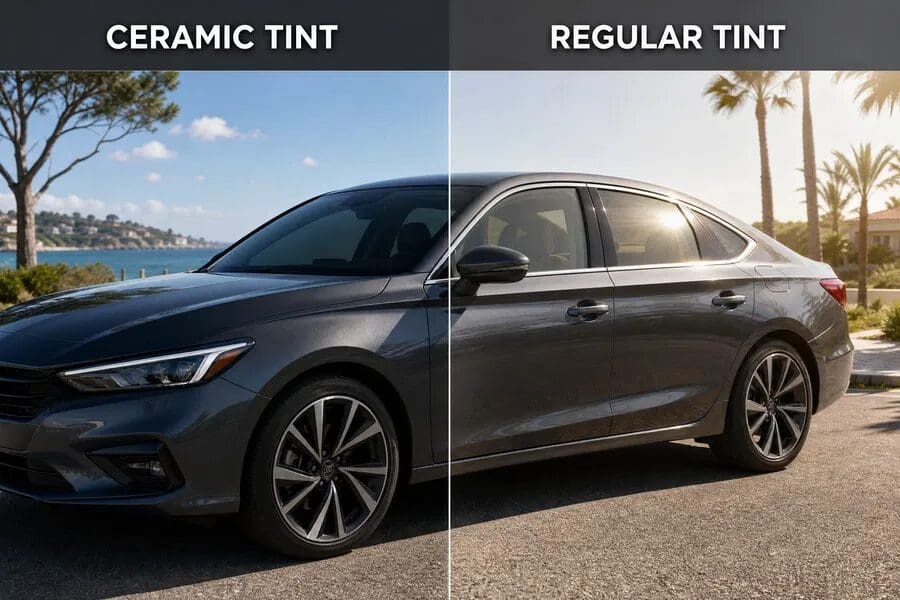
Window tinting is one of the most practical upgrades you can make to a vehicle. It can improve privacy, reduce glare, help control cabin temperatures, and protect the interior from prolonged sun exposure. However, choosing the right type of film can be confusing, especially when comparing ceramic and regular tint.
Understanding ceramic tint vs regular tint comes down to more than appearance. Both options can make your driving experience more comfortable, but they differ significantly in construction, heat rejection, UV protection, durability, appearance, and price. Knowing these differences can help you choose a tint that fits your vehicle, climate, driving habits, and budget.
What Is a Regular Window Tint?
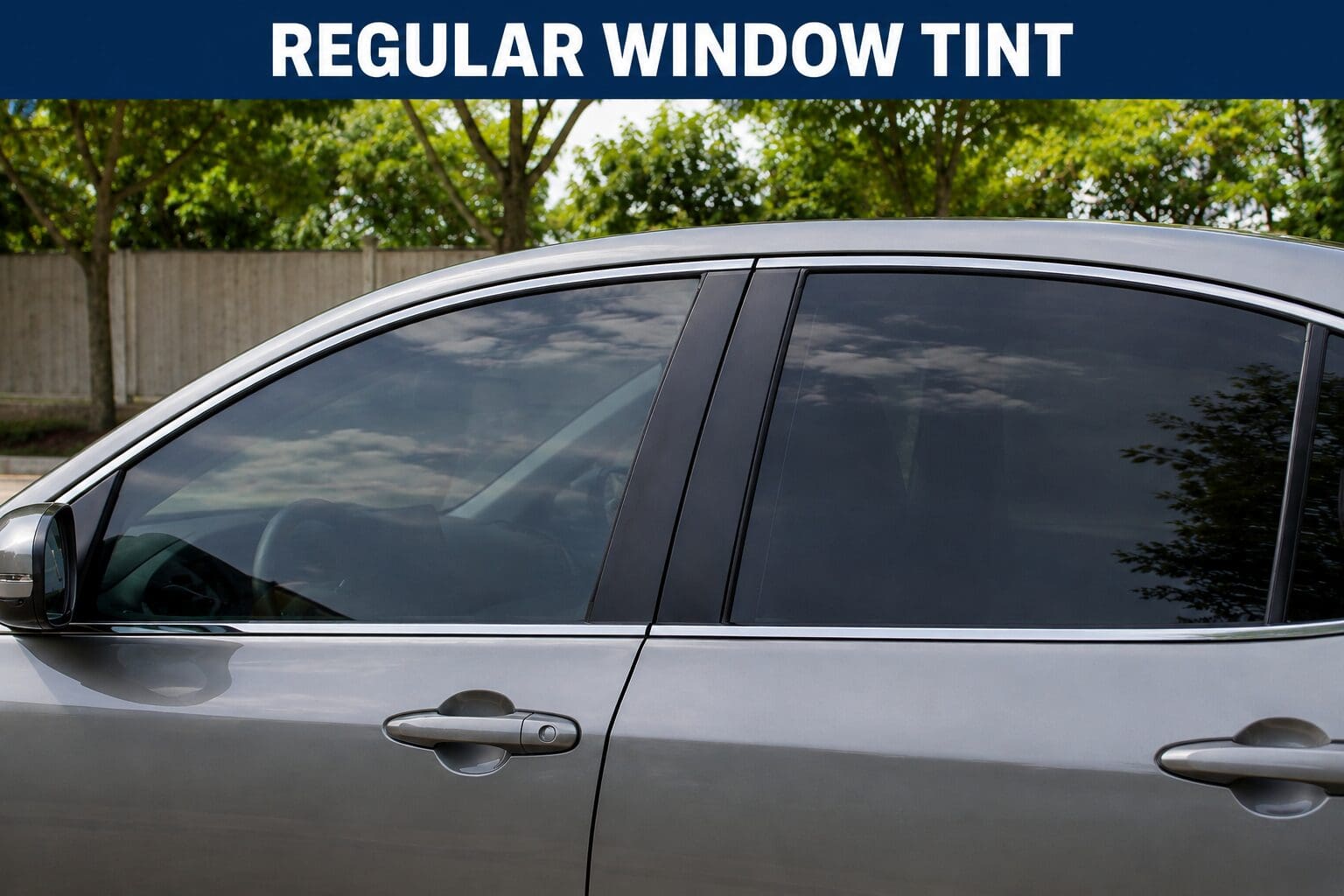
Regular window tint generally refers to traditional dyed or dyed and metalized window films. Dyed tint uses layers of dye to create a darker appearance and reduce the amount of sunlight entering the vehicle. Metalized films use microscopic metallic particles to provide additional heat and glare rejection.
Traditional tint remains popular because it is generally affordable and provides basic benefits. It can improve privacy, reduce some sunlight, and give a vehicle a cleaner appearance without requiring a large investment.
However, the performance of regular tint can vary considerably depending on the film’s construction and quality. Some inexpensive dyed films may fade over time, while certain metalized films can potentially interfere with radio, GPS, or cellular signals.
What Is Ceramic Window Tint?
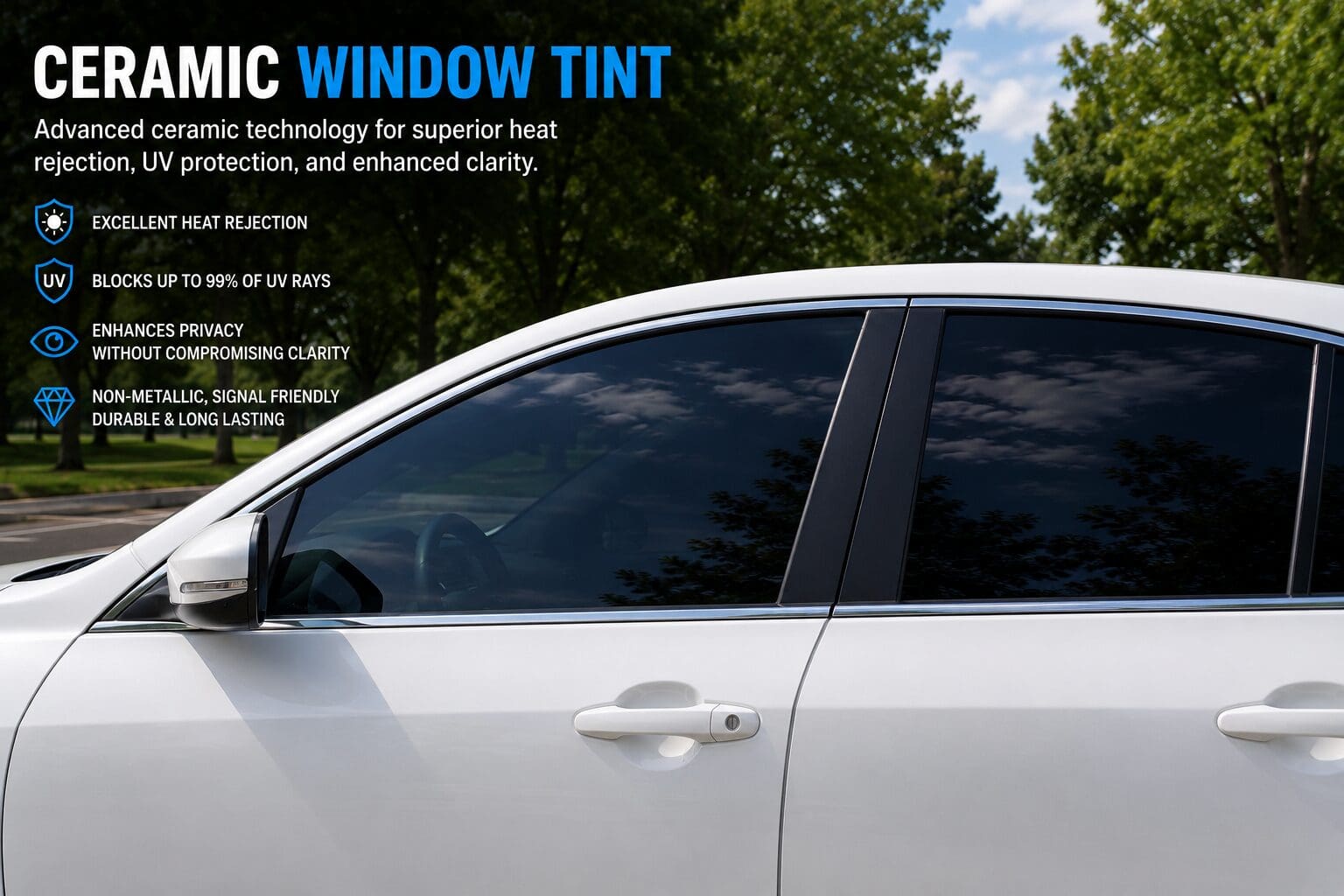
Ceramic window tint is a more advanced type of automotive window film. Instead of relying primarily on dye or metallic particles, ceramic films use extremely small ceramic particles incorporated into the film.
These particles are designed to reject significant amounts of solar energy while allowing manufacturers to produce films with different levels of visible light transmission. This means a ceramic film can provide strong heat and UV protection without necessarily needing to be extremely dark.
When considering ceramic tint vs regular tint, ceramic film generally represents the premium end of automotive window tint technology. It is designed for drivers who prioritize performance, longevity, comfort, and advanced solar protection.
Ceramic Tint vs Regular Tint: Heat Rejection
One of the biggest reasons drivers choose ceramic film is its ability to manage solar heat.
Traditional dyed tint can reduce some sunlight entering the cabin, but its heat rejection capabilities depend heavily on the film’s construction and quality. Darker traditional film may make a noticeable difference, but darkness does not automatically mean superior heat rejection.
Ceramic films are engineered to reject infrared radiation, which is a major component of the sun’s heat. As a result, a high-quality ceramic film can help keep the cabin more comfortable, particularly during hot weather.
For drivers in sunny climates such as Arizona, this distinction can be particularly important. A vehicle that sits outside for hours can become extremely hot, and high-performance window film can help reduce the amount of solar energy entering through the glass.
UV Protection
Ultraviolet radiation can contribute to fading and deterioration of automotive interiors. Prolonged UV exposure can affect materials such as leather, vinyl, plastic, upholstery, and other interior surfaces.
Both quality regular tint and ceramic tint can provide UV protection, but premium ceramic films are designed to deliver strong UV blocking performance.
When evaluating ceramic tint vs regular tint, buyers should not assume that every film provides the same level of protection. Instead, check the manufacturer’s specifications and look for documented UV rejection performance.
UV protection can be especially useful for people who spend significant amounts of time driving or frequently leave their vehicles parked outdoors.
Glare Reduction
Glare can make driving uncomfortable, particularly during sunrise, sunset, or bright summer conditions. Window tint can reduce the amount of visible light entering the cabin, helping create a more comfortable environment.
Regular tint can provide effective glare reduction, especially when an appropriate shade is selected. Ceramic tint can also reduce glare while providing additional heat and UV protection.
The key is choosing the right visible light transmission, commonly referred to as VLT. A darker film is not automatically better. Drivers should select a shade that balances glare reduction, visibility, privacy, aesthetics, and local regulations.
Appearance and Privacy
Appearance is another important factor when comparing ceramic tint vs regular tint.
Traditional dyed tint can provide the darker appearance many vehicle owners want. It can give windows a sleek, uniform look while increasing privacy.
Ceramic films are also available in a range of shades. Importantly, ceramic tint does not have to be extremely dark to provide meaningful performance. A relatively lighter ceramic film can still offer strong solar protection.
This makes ceramic film an attractive option for drivers who want heat rejection without significantly reducing visibility.
Durability and Longevity
The lifespan of window tint depends on film quality, installation, climate, vehicle use, and maintenance.
Lower quality dyed films may be more susceptible to fading, discoloration, or degradation over time. As the film ages, its appearance and performance may change.
High-quality ceramic films are generally designed for greater long-term stability. Their construction can help them maintain their appearance and performance for many years when properly installed and cared for.
However, ceramic tint is not indestructible. Proper cleaning, careful use of window controls, and professional installation can all contribute to longer film life.
Signal Interference
Another difference worth considering is how the film interacts with electronic signals.
Some metalized traditional films contain metallic particles that can interfere with certain radio, GPS, or cellular signals. This is not necessarily an issue with every metalized film, but it is something buyers should consider.
Ceramic films are typically designed without relying on metallic particles. As a result, quality ceramic films are generally compatible with modern communication and vehicle electronics.
For newer vehicles equipped with advanced technology, this can be an important consideration when selecting window film.
Cost Differences
Price is one of the clearest differences in ceramic tint vs regular tint.
Regular dyed tint is generally less expensive and can be a practical choice for drivers who primarily want improved appearance, privacy, and basic solar protection.
Ceramic tint usually costs more because of its advanced materials, performance characteristics, and manufacturing process. Professional installation also contributes to the overall price.
Although the initial investment is higher, some drivers consider ceramic tint worthwhile because it combines heat rejection, UV protection, durability, comfort, and appearance.
Rather than choosing solely according to price, consider what you want the film to accomplish. If appearance and affordability are your primary goals, traditional tint may be sufficient. If long term performance is more important, premium ceramic film may provide greater value.
Ceramic Tint vs Regular Tint: Which Is Better for Hot Climates?
Climate should play a major role in your decision.
In regions with intense sunlight and high summer temperatures, heat rejection can be one of the most valuable benefits of automotive window tint. Ceramic film can provide advanced infrared heat rejection while maintaining a relatively clear appearance.
Regular tint can still help reduce sunlight and cabin heat, but performance depends on the specific film.
For drivers in consistently hot environments, ceramic tint can be a particularly attractive investment because the goal is not simply to make windows darker. The goal is to reduce solar heat entering the cabin.
Installation Quality Matters
Even the best window film can perform poorly if it is installed incorrectly.
Professional installation helps ensure that the film is properly measured, positioned, applied, and finished. Poor installation can result in bubbles, creases, contamination, peeling edges, or uneven coverage.
This is why comparing ceramic tint vs regular tint should not be limited to the material itself. The quality of installation can have a major effect on the final appearance and performance.
A reputable tinting professional can also help you select an appropriate shade based on your vehicle, driving conditions, preferences, and applicable tint regulations.
Which Tint Should You Choose?
There is no single answer for every driver.
Regular tint may make sense if you want an affordable way to improve privacy, appearance, glare reduction, and basic solar protection.
Ceramic tint may be a better fit if you want advanced heat rejection, strong UV protection, long-term performance, and a premium finish. It can be particularly useful for drivers who live in hot, sunny areas or regularly park their vehicles outdoors.
Ultimately, ceramic tint vs regular tint is a decision between different levels of performance, technology, and investment. Understanding your priorities can make the choice much easier.
Conclusion
Choosing the right window film can make a meaningful difference in your vehicle’s comfort, appearance, and interior protection. While regular tint can provide useful benefits at a lower price, ceramic tint offers a more advanced approach to heat rejection, UV protection, durability, and everyday comfort.
If you want to do tinting in Scottsdale, AZ, contact Rogue Films. We are a premier source for professional PPF and window tinting, helping vehicle owners protect their investments while enhancing their vehicles’ appearance and comfort. Our team can help you determine which film is appropriate for your vehicle, preferences, and driving conditions.
Ready to upgrade your vehicle? Contact Rogue Films today to discuss your window tinting or PPF needs and get started with professional installation.
Frequently Asked Questions (FAQs)
Q-1. Is ceramic tint better than regular tint?
Ans: Ceramic tint generally offers stronger heat rejection, UV protection, durability, and overall performance than many traditional dyed films. Regular tint can still be a practical option when affordability is the primary consideration.
Q-2. Does ceramic tint keep a car cooler?
Ans: Yes. High-quality ceramic window films are designed to reject infrared solar energy, which can help reduce the amount of heat entering the vehicle and improve cabin comfort.
Q-3. Is ceramic tint worth the extra cost?
Ans: For drivers who prioritize heat rejection, UV protection, durability, and long-term performance, ceramic tint can be worth the additional investment. The value depends on your vehicle, climate, budget, and priorities.
Q-4. Does ceramic tint have to be very dark?
Ans: No. Ceramic tint is available in different VLT levels, so you can choose a relatively light film while still receiving significant solar protection. Always consider applicable local tint regulations when selecting a shade.
Q-5. How long does ceramic window tint last?
Ans: The lifespan depends on film quality, installation, climate, vehicle use, and maintenance. High-quality ceramic film installed professionally can provide long-lasting performance when properly maintained.