


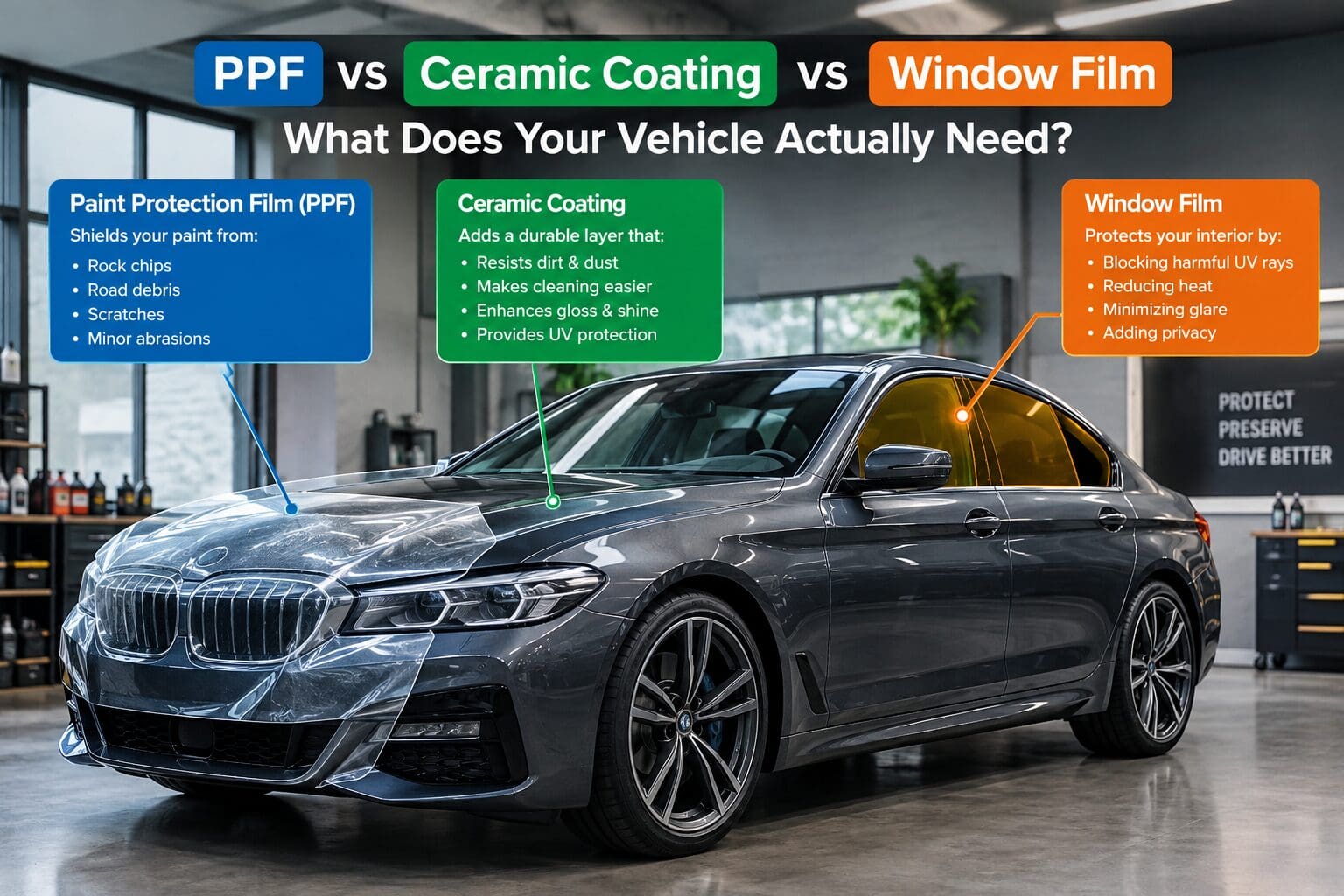
Your vehicle faces different types of exposure every time you drive it. Road debris can strike the paint, sunlight can cause heat and UV exposure, dust can accumulate on exterior surfaces, and everyday driving can gradually affect the appearance of your car. For owners who want to preserve a vehicle’s condition, modern automotive protection products offer several solutions.
The challenge is knowing which one is right for your vehicle.
The PPF vs Ceramic Coating vs Window Film conversation is not really about choosing a single winner. Each technology protects a different part of the vehicle and addresses different problems. Paint protection film, ceramic coating, and automotive window film can even complement one another when used as part of a broader vehicle protection strategy.
Understanding what each product does, what it does not do, and where it provides the most value can help you make a more informed decision.
Understanding the Basics of Vehicle Protection
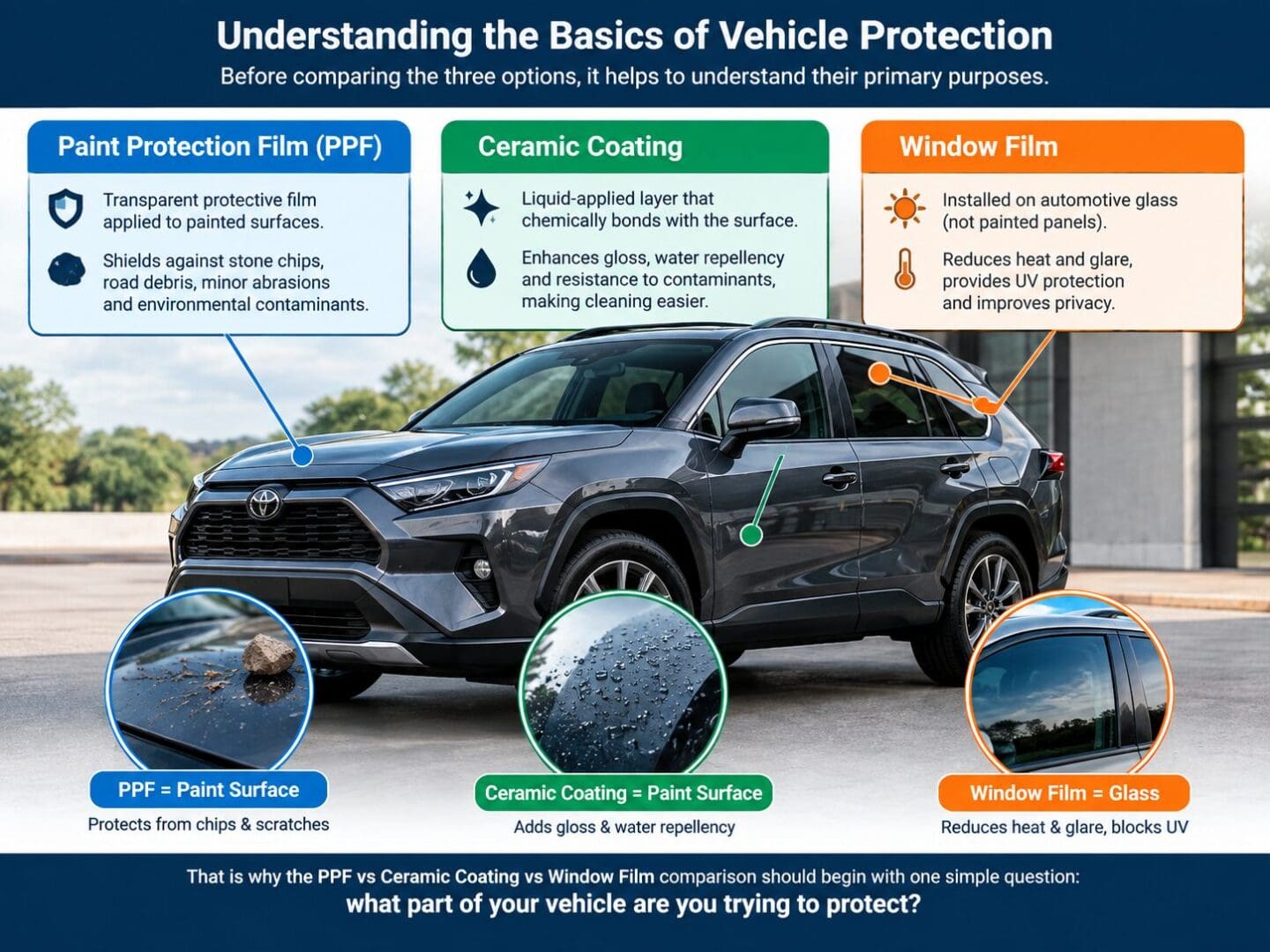
Before comparing the three options, it helps to understand their primary purposes.
Paint Protection Film, commonly called PPF, is a transparent protective film applied to painted surfaces. Its primary role is to create a physical barrier between the vehicle’s paint and common road hazards such as stone chips, road debris, minor abrasions, and environmental contaminants.
Ceramic coating is a liquid-applied protective layer that chemically bonds with a vehicle’s prepared surface. It is primarily known for enhancing gloss, water repellency, and resistance to certain contaminants while making routine cleaning easier.
Window film is installed on automotive glass rather than painted body panels. Depending on the product, it can help reduce heat and glare while providing UV protection and improving privacy.
That is why the PPF vs Ceramic Coating vs Window Film comparison should begin with one simple question: what part of your vehicle are you trying to protect?
What Is a Paint Protection Film?
PPF is a transparent, flexible film engineered to protect automotive surfaces from physical damage. It is particularly useful in areas that receive significant exposure to road debris.
Common PPF applications include:
- Front bumpers
- Hood
- Front fenders
- Side mirrors
- Door edges
- Rocker panels
- Headlights
- High-impact areas
One of the biggest advantages of PPF is its ability to provide a sacrificial layer over the vehicle’s original finish. Instead of an impact reaching the paint directly, the film takes the exposure.
Modern PPF can also provide a high-quality finish when professionally installed. Depending on the product and application, some films include self-healing properties that can help minimize the appearance of certain light surface scratches when exposed to appropriate heat.
For new, luxury, exotic, collectible, and enthusiast vehicles, PPF can be especially valuable because preserving the original paint can be an important part of maintaining the vehicle’s appearance.
What Is Ceramic Coating?
Ceramic coating takes a different approach to protection. Rather than applying a physical sheet of film, technicians prepare the vehicle’s surface and apply a liquid coating designed to bond with it.
Once cured, the coating creates a protective surface that can provide several benefits.
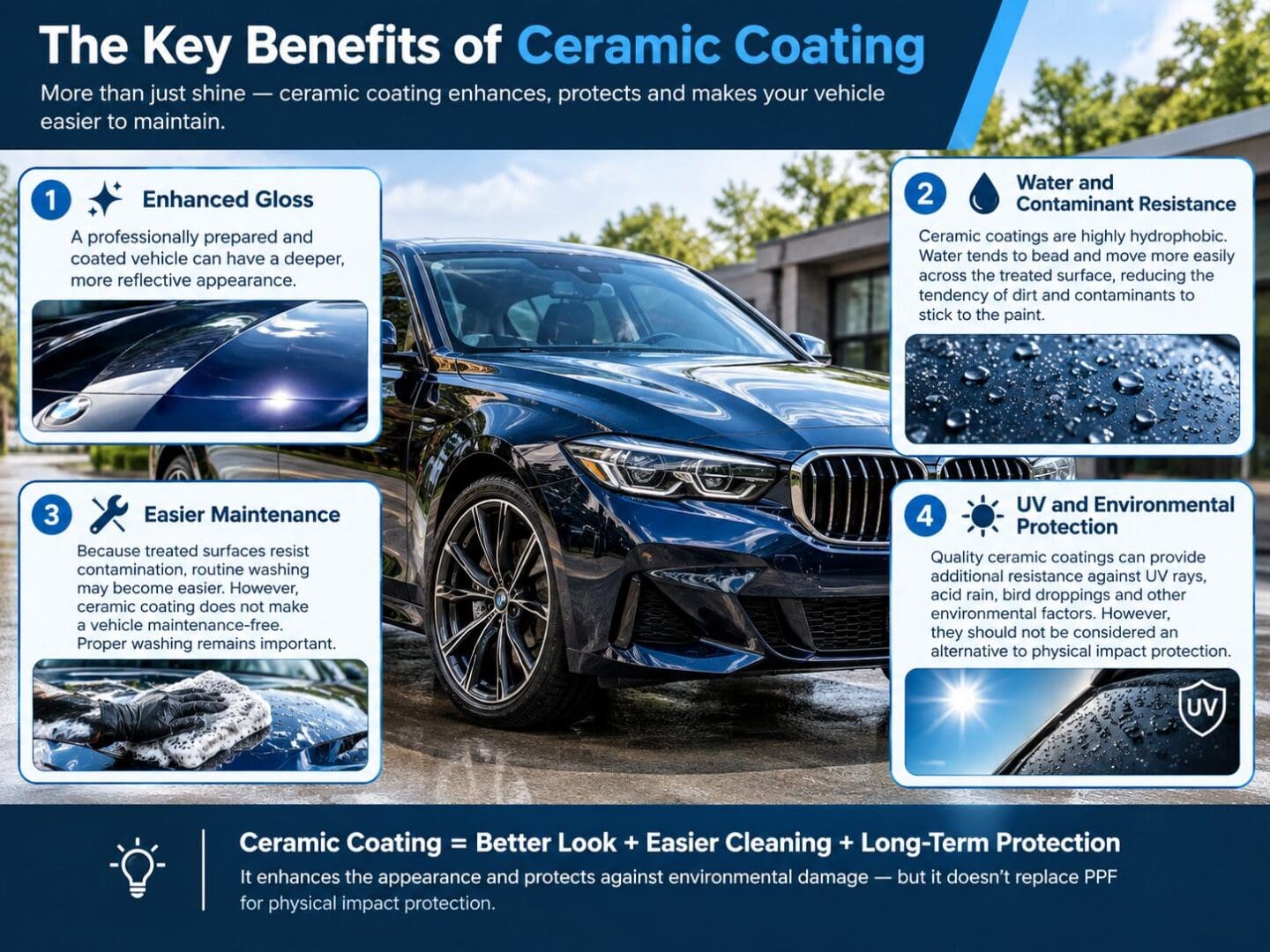
I. Enhanced Gloss
A professionally prepared and coated vehicle can have a deeper, more reflective appearance. Ceramic coating is often selected by owners who want to enhance the visual finish of their vehicle while adding a layer of protection.
II. Water and Contaminant Resistance
Ceramic coatings are highly hydrophobic. Water tends to bead and move more easily across the treated surface. This characteristic can help reduce the tendency of certain contaminants to remain bonded to the paint.
III. Easier Maintenance
Because treated surfaces can become more resistant to contamination, routine washing may become easier. However, ceramic coating does not make a vehicle maintenance-free. Proper washing remains important.
IV. UV and Environmental Protection
Quality ceramic coatings can provide additional resistance against environmental exposure. However, they should not be considered an alternative to physical impact protection.
This distinction is crucial when considering PPF vs Ceramic Coating vs Window Film because ceramic coating excels at surface enhancement and chemical/environmental protection, while PPF is designed to provide a physical barrier.
What Is Automotive Window Film?
Window film serves a completely different purpose because it is applied to automotive glass.
A quality automotive window film can provide benefits such as:
- Reduced solar heat
- UV protection
- Glare reduction
- Increased privacy
- Improved cabin comfort
- Additional protection for vehicle occupants and interior materials
The amount of heat and light reduction depends on the film technology and shade selected.
For drivers in hot climates, window film can be particularly useful. It can help make the cabin more comfortable by reducing solar energy entering through the glass. UV protection can also help reduce exposure that may contribute to fading or deterioration of interior materials over time.
Window film is therefore not a substitute for PPF or ceramic coating. It solves a different problem.
PPF vs Ceramic Coating vs Window Film: The Main Difference
The easiest way to understand the PPF vs Ceramic Coating vs Window Film comparison is to look at what each product protects.
| Protection | PPF | Ceramic Coating | Window Film |
| Painted body panels | Excellent | Excellent | No |
| Physical impact protection | Excellent | Limited | No |
| Light scratch protection | Excellent, depending on film | Limited | No |
| Water repellency | Good | Excellent | No |
| Gloss enhancement | Good | Excellent | No |
| UV protection | Some products | Yes | Excellent for glass applications |
| Heat reduction | No | No | Excellent |
| Glare reduction | No | No | Excellent |
| Interior privacy | No | No | Excellent |
| Easier exterior maintenance | Good | Excellent | No |
The table makes one thing clear: there is no universal winner.
PPF vs Ceramic Coating: Which One Is Better?
The answer depends on the type of protection you need.
If your primary concern is rock chips, scratches, road debris, and physical damage, PPF is generally the more appropriate choice.
If your priorities are gloss, hydrophobic performance, easier maintenance, and additional surface protection, ceramic coating may be the better fit.
This is why PPF vs Ceramic Coating vs Window Film should not be treated as a competition where one product eliminates the need for the others. PPF and ceramic coating can serve different purposes on the same vehicle.
For example, an owner may install PPF on the front bumper, hood, fenders, and mirrors, then use ceramic coating on exposed painted surfaces. The combination can provide both physical protection and surface enhancement.
PPF vs Window Film: Two Completely Different Applications
The comparison between PPF and window film is even more straightforward.
PPF protects the exterior paint and selected vehicle surfaces. Window film protects and modifies the performance of automotive glass.
If you are worried about rock chips on the front bumper, window film will not solve the problem.
If you are worried about intense sunlight entering the cabin, PPF will not solve that problem either.
This is another reason the PPF vs Ceramic Coating vs Window Film decision should be based on your vehicle, driving habits, climate, and priorities rather than simply selecting the most popular product.
Can You Use PPF, Ceramic Coating, and Window Film Together?
Yes. In fact, using multiple technologies can create a more comprehensive vehicle protection strategy.
Think of your vehicle as several different zones.
The paint needs protection from physical and environmental exposure. PPF can address physical impact in high-risk areas, while ceramic coating can provide surface enhancement and hydrophobic performance.
The glass has different requirements. Window film can help reduce heat, glare, and UV exposure while changing the appearance and privacy of the windows.
When combined correctly, these solutions can work together without performing the same job.
For owners of high-end vehicles, this comprehensive approach can be especially attractive because it focuses on preserving both the exterior appearance and the interior driving environment.
Which Vehicles Benefit Most From PPF?
PPF can make sense for a wide variety of vehicles, but certain owners may find it particularly valuable.
1. New Vehicles
Installing protection early can help preserve factory paint before significant road exposure occurs.
2. Luxury and Exotic Vehicles
Premium vehicles often feature expensive finishes and distinctive bodywork. Protecting vulnerable areas can help maintain their appearance.
3. Daily Drivers
Frequent highway driving can increase exposure to road debris, making impact protection valuable.
4. Performance Vehicles
Owners who regularly drive enthusiast or performance vehicles may want additional protection on areas exposed to road hazards.
5. Collector Vehicles
Preserving original paint can be an important consideration for vehicles where condition and appearance are especially valuable.
When Does Ceramic Coating Make More Sense?
Ceramic coating may be ideal for owners who prioritize appearance and easier maintenance.
It can be especially useful for people who want a glossy finish and hydrophobic surface without installing a film over the entire vehicle.
However, it is important to maintain realistic expectations. Ceramic coating is not an invisible suit of armor. It does not provide the same physical impact protection as PPF.
Understanding this difference can prevent one of the most common mistakes in the PPF vs Ceramic Coating vs Window Film discussion: expecting one product to perform every protective function.
When Should You Consider Window Film?
Window film deserves consideration if cabin comfort, UV exposure, glare, or privacy are major concerns.
This can be particularly relevant in sunny climates where vehicles may spend considerable time exposed to intense sunlight.
The right film should also comply with applicable local regulations regarding visible light transmission and window tinting. Product selection should therefore consider both performance and legal requirements.
Factors to Consider Before Choosing Vehicle Protection
Rather than choosing protection based solely on price, consider these factors.
I. Your Driving Habits
Frequent highway driving can increase the value of impact protection. A vehicle primarily used for short local trips may have different requirements.
II. Your Climate
High levels of sunlight and heat can make window film particularly useful, while environmental exposure can influence your exterior protection priorities.
III. Your Vehicle
A new luxury vehicle, daily commuter, sports car, and collector vehicle may all require different protection strategies.
IV. Your Maintenance Preferences
If you want easier exterior cleaning and strong water repellency, ceramic coating may be appealing.
V. Your Long-Term Plans
Think about how long you plan to keep the vehicle and how important maintaining its appearance is over that period.
The most effective PPF vs Ceramic Coating vs Window Film strategy is ultimately one built around your specific vehicle rather than a one-size-fits-all package.
Why Professional Installation Matters
The quality of installation can have a major effect on the final appearance and performance of automotive protection products.
PPF installation requires precision around curves, edges, contours, sensors, and complex bodywork. Ceramic coating requires thorough surface preparation because imperfections beneath the coating can remain visible after application. Window film requires accurate cutting, positioning, and application to achieve a clean finish.
This is why choosing an experienced automotive protection specialist is just as important as selecting the technology itself.
Rogue Films: Advanced Vehicle Protection in Scottsdale, AZ
At Rogue Films, we believe premium vehicle protection should combine experience, precision, technology, and attention to detail.
Founded in 2018 by Matt and Dawn Stecker, our company brings decades of automotive film experience to every project. Our founder has more than 22 years of experience specializing in protective automotive films and more than 31 years in the window film industry.
Our approach goes beyond simply applying a product. We use advanced CAD software and scanning equipment to design and manufacture custom patterns for precise installations. Our proprietary application techniques also allow us to work with complex curves and challenging surfaces while maintaining a clean, refined finish.
We provide PPF, ceramic coating, and window film in Scottsdale, AZ, allowing vehicle owners to address different areas of protection through a coordinated approach.
When considering PPF vs. ceramic coating vs. window film, our goal is not to push you toward a particular product. Instead, we can help determine which combination makes sense for your vehicle, driving habits, priorities, and desired level of protection.
Our climate-controlled facility near Scottsdale Airport is designed around the care and security of the vehicles entrusted to us. With advanced equipment, experienced technicians, and a commitment to continuous innovation, we strive to deliver the level of craftsmanship expected by discerning vehicle owners.
Build the Right Protection Strategy for Your Vehicle
There is no universal answer to the PPF vs Ceramic Coating vs Window Film question because each technology addresses a different part of vehicle protection.
PPF is primarily about creating a physical barrier against road hazards. Ceramic coating focuses on surface enhancement, hydrophobic performance, and easier maintenance. Window film focuses on the vehicle’s glass, helping address heat, glare, UV exposure, and privacy.
For some vehicles, one solution may be enough. For others, combining two or all three can create a more comprehensive protection strategy.
The important thing is to understand what you are protecting and why.
At Rogue Films, we bring extensive experience, advanced technology, and specialized installation techniques to automotive protection in Scottsdale, AZ. Whether you are looking for precision PPF, ceramic coating, premium window film, or a combination designed around your vehicle, our team is ready to help you make an informed decision.
Ready to protect your vehicle? Contact Rogue Films today to discuss your vehicle protection goals and discover the right combination of PPF, ceramic coating, and window film for your vehicle.